
Introduction
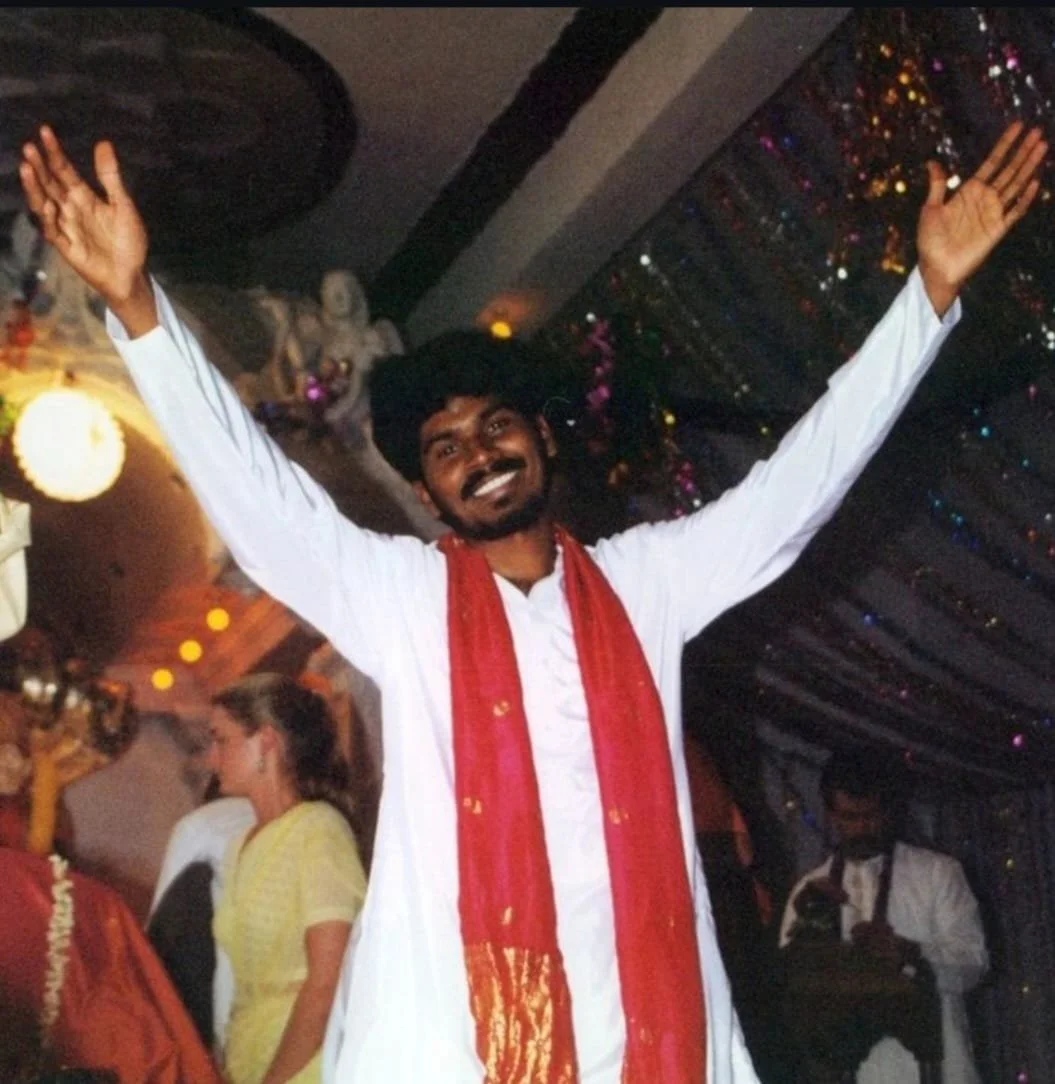
Jesus lived in India for extended periods on two occasions, once before and again after his reported early death. Kaleshwar was his friend during that life and also Mother Mary’s teacher for a time. As such, he witnessed the crucifixion and helped Mary heal her son’s broken body by yogic means. Later, he would return to illuminate the circumstances of Jesus’s ‘successful failure’ and provide new impetus for fulfilment of its mission at the end of our present Kali Yuga.
From a preliminary notice regarding my 2025 talk Remembering Spirit in an Age of Loss :
Most of you won’t have heard from me for over ten years. During that time I have been engaged in largely solitary work of research, writing and meditation that is only now coming to fruition. This talk will be the first public sharing of what I have learned. It comes at a time of great transition: from West to East, certainty to doubt, Pisces to Aquarius and Kali Yuga to indefinite peril. It also arises in a ‘2012’ window that is still open, during which ancient spiritual cultures have felt moved to share their treasures with a modern world that has largely disdained and exploited them. This points to a great remembering that is trying to happen despite seemingly fathomless depths of greed, violence and separation that afflict us collectively. I began developing a frame to promote such remembering in 2011. My attempt appeared to fail in 2021 only to be revived within days by miraculous exposure to the work of a great Indian saint, Sri Kaleshwar (1973-2012). It has taken me over four years to become clear enough regarding this material to share what has been the most important learning of my life in terms of the spiritual access it allows and the hope of civilizational renewal it engenders. This follows from Kaleshwar’s reintroduction of the Sacred Feminine (below). It is advisable to read all the entries cited here ahead of a first Kaleshwar volume that will soon be available under ‘Books.’
*
I first connected with Sri Kaleshwar in October 2021 by magical means. He was singing the Maheshvari prayer, about which I knew nothing. Days before, after ten years and five volumes, my writing had hit a wall. I knew the problem was inadequate representation of the Sacred Feminine and had hoped that Grail inspiration would see me through. It didn’t. Now, as I heard Kaleshwar’s voice, my Heart cracked open. I learned about his reintroduction of Divine Mother teachings and knew that I had found my Way again. He even sent dreams to illuminate it and has lived in my Heart ever since. A first dream directed me to learn basic Five Elements and Holy Womb systems from his teachings. The last directed me to introduce Maha Kali, Mother’s most radical and terrifying form, to intellectual audiences that might not otherwise take notice. This was compatible with my original plan to clarify foundations for a universal spirituality, only now it involved drawing on what turns out to be our oldest fully spiritual tradition. Well into a fourth year and final stage of this process I realise how nuanced it has been, how little it has been of my own design and how provisional the outcomes presented here still seem…
We begin in wonder but unfold in story as elaboration forces words and thoughts to grasp what matters. It wasn’t always so. There was once a period of Truth, a Sat Yuga where ‘wording’ was supernaturally steeped in right order. Spiritually concussed at the end of a Kali Yuga of extreme negativity, we find ourselves bewildered and mistrusting in face of such recollection. Our bewilderment is aggravated by traces of eternal recurrence, whereby deep memories of a primary Creation are obscured by echoes of repeating time cycles. These present the entire sequence as happening over and over, with existence apparently rising from a No-thingness of pure Be-ing only to be resorbed by it again and again, always exhibiting the same rise-fall-rise without any inkling of purpose served or benefits accrued, seemingly to no end. Our tortured questioning may be the most poignant ever as we drown in cumulative grief, a threat to ourselves yet buoyed by unprecedented hope for knowing that Jesus as unique avatar has lived his only life, so breaking a seal set upon previous recurrences. Kaleshwar has also been and gone to mediate the impact of that Coming for a humanity at last prepared to grasp that a Second Coming of Christ Consciousness won’t be achieved by the literal return of a unique saviour figure but rather that deep remembering is required of Jesus’ standing as an ideal model for our potential as full humans, to be actualised in due course by every soul ever poised between Eternity and time…
[From Holy Womb, Holy Grail, volume 6 of The Calendar and the Grail, forthcoming]
How Kaleshwar Found His Dharma
Sri Sai Kaleshwar (1973-2012) was born in the South Indian state of Andra Pradesh. A brilliant student from his earliest years, he became very interested in science. One day, aged 14, he went to study in a small temple situated in the middle of a rice field near his home. Intent on his books he noticed nothing odd until, looking up, he saw an old man sitting before him dressed in beggar’s rags. Reaching into his garment, the man produced a tin cup filled with rancid food. ‘Eat,’ he urged, offering the battered cup. ‘You don’t need to eat that,’ Kaleshwar replied. ‘My mother is an excellent cook. I’ll get you something from her kitchen.’ Tears appeared on the old man’s cheeks but he remained adamant. He took a stick and stirred the cup. A wonderful fragrance arose and Kaleshwar knew the food was somehow cooking. Reluctantly, he took some and was amazed to find that it had the most delicious taste. Moments later he rose to wash his hands at a tap just yards away. Turning back, he found that the old man had vanished. He climbed up on the temple roof but there was no-one to be seen in any direction.
The old man returned in a dream the following night and identified himself as Shirdi Baba, a venerable saint who is now very famous and had spent his entire adult life in a once tiny hamlet called Shirdi. Born in 1838, Baba died in 1918 having prepared the ground for an epochal spiritual transformation in which Kaleshwar was also destined to play a leading role. Already his life was starting to change as a result of that temple encounter. Although he didn’t know it then, avatars awaken at age 14. This usually involves meeting a master who oversees the process. Kaleshwar quickly lost interest in his studies and turned his attention to spiritual texts that began finding their way to him. Over the following years he would accumulate a whole library of palm leaf manuscripts. All featured mantra-heavy spiritual knowledge etched by ancient rishis onto palm leaves as far back as 10,000 years before. This happened as fears arose for the survival of teachings that had been orally transmitted by masters to trusted students over many generations. Written in Sanskrit and Telegu (Kaleshwar’s mother tongue), the texts are coded so that only eligible eyes can decipher them. His task would be to reintroduce their content to the modern world after millennia of neglect. This and his special affinity for Mother Divine had been foretold centuries before.
He turned his attention passionately to this task. Schoolwork suffered, prompting his father to an angry and sometimes violent response. Nothing could dissuade him however and he was eventually expelled from the family home. With Baba’s inward reassurance, Kaleshwar went travelling, staying in ashrams, asking questions and learning from every possible source. More palm leaf texts were presented, drawn by his increasingly apparent light. Once while he was meditating in a temple, a burly sadhu entered and, manifesting ash from his hands, began covering a Shiva lingam with it. Afterwards the man approached Kaleshwar and struck him forcibly. Kaleshwar, knocked sideways asked why. ‘I saw you trying to steal my power.’ ‘I wasn’t. I don’t need your power. I have my own master.’ The yogi’s angry front dissolved. ‘Your master told me to hit you.’ It is said that Mozart was touched by God. By comparison, it would appear, Kaleshwar was decisively favoured. In any case, he began from that moment to recollect past lives and remember what his life mission would be. By age 24, he was ready to come to the West.
[Note: I have come across variations of ‘classic’ Kaleshwar stories from different sources, so whispering telephone effects may have crept in. I remain wholly satisfied, however, as to their essential accuracy and Truth value.
California Dreaming
An earlier Indian saint, Yogananda, had already made a big impact in America. His Foundation was headquartered in LA, where many other Eastern teachers had also taught. Hence there was already a receptive community in place. An audience of people with a special interest in healing was arranged to greet a new young saint who spoke very little English. Kaleshwar began by manifesting a rose in his palm. Next he caused it to burst into flames that burned without consuming its source. Eventually he let it burn to ash. He then passed through the hall, anointing all present with it. Amongst these was one man who would become a senior student and another, his friend, who had received a terminal cancer diagnosis. Everyone who received Kaleshwar’s blessing reported healing benefits, including the friend, who recovered completely. Word spread rapidly, even reaching Oprah Winfrey, who wanted the young saint for her next show. He declined, saying that he wanted to attract a small number of dedicated students who would join him in India rather than thousands of casual seekers. More meetings were arranged, a group was assembled and from 1997 the first Western students began arriving in Penukonda, where Kaleshwar’s ashram was in the early stages of construction.
Apparently he didn’t expect to live very long as he explained repeatedly that he would be a million times more effective working outside a body. First he needed to train a pioneering generation of Westerners who would be able to transmit his teachings without distortion. This was important because of chaos levels he discerned in the modern world and a disturbing inertia that he found in traditional Indian spiritual practice. What were yogis really accomplishing, he asked, if they just spent their time just sitting in bliss? This was a necessary but not sufficient Enlightenment practice. A healing engagement with the world was also required, including the qualitative West. Western students were best suited for this, both for their dynamic attitude and because they carried the modern chaos within. He would train them hard to wash out blockages and engender a shared culture of Dharma and Truth. This apparently took much longer than he first imagined. He began formally by teaching the Five Elements, a foundational programme that purifies our relationship with Earth, Fire, Sky, Water and Air as the basic pillars of Creation. This was followed by the Sri Chakra, which he didn’t associate explicitly with Mother’s Holy Womb until years later. The reason for this circumspect approach was that he didn’t want his mission or students exposed to potentially debilitating levels of Illusion before they were able to manage them.
There is a vast backstory here that needs to be unfolded carefully, in stages (see Part III of Remembering Spirit). A key factor is that Consciousness in existence tends to develop attachments to given forms and so resists transformation. In humans a major aspect of this tendency is the elaboration of ego stories that reinforce the hold of illusion by consolidating a sense of our separateness from each other and All That Is. This compounds our estrangement from Truth even as we aim to overcome it. Mother lets this tendency run by way of testing insight, resilience and sincerity before granting further inspiration. Kaleshwar thus had to be careful during these early years. His use of miracles, he explained, was initially to draw attention and, beyond that, to shatter conditioned belief systems so that hungry souls might awaken past then to the radical spirituality he had come to promote. Even now, it takes considerable manoeuvring to establish the significance of this in regard to a ‘post-Truth’ intellectual culture where Awareness of the Sat Yuga (of Truth) has been all but erased from consciousness levels that our defensive ego selves are now capable of.
On the face of it, Kaleshwar had little to say about such matters. He did however arrange darshans – fully physical, open-eyed manifestations – for his students, including with Jesus and Mother Divine. He also spoke a colloquial English to which they adapted gratefully as it always occurred in contexts of direct transmission where its impact was supported by the depth and energy of his teaching. For people without knowldge of context and access to such mesmerizing transmissions, his written words may seem trite or void of intellectual substance. Nothing could be further from (the) Truth. Indeed, it was an intuition of poetic depth that motivated me to look deeper and find in his work a key to resolve issues that had perplexed me across years of writing and research. A trip to Penukonda in 2024 confirmed a sense that I needed to explore his teachings further.
During that time I managed to establish soul communion and offered to give up my writing if he had some other path in mind. He told me to keep going. The consequences of this are still unfolding. During his lifetime, Kaleshwar’s primary focus was to train healers, drawn initially from America, Germany and Japan. Students from other countries soon followed. Lacking a clear vocation, I can’t count myself among their number but am resolved to support their necessary and invaluable work by other means. I also hold myself open to whatever the future may require.
Penukonda Epiphanies
I had several key spiritual experiences while visiting Kaleshwar’s Penukonda ashram during spring,2024. These are shared below in order of their occurrence although their energetic impact actually unpacked in a reverse sequence. The outcome of this process is described across various parts of Remembering Spirit under ‘Books’. The Mother in iii) refers to a ‘living statue’, 9 feet tall, that Kaleshwar installed and sacramentally infused with the presence of Kaneka Durga (a benign form of Mother) in what would become the antechamber to his Samadhi (resting place). Part IV of Holy Womb, Holy Grail under ‘Books’ will soon offer a properly contextualised account of all four:
i) Shiva Cave
… Our next engagement was at the Shiva Cave, a crypt-like space where we each had a chance to offer two abisheks (water blessings) to a lingam that had once belonged to Jesus. This was part of a build-up to the great night of Shivaratri, when the God relinquishes his austerities and, eyes open, bestows favour on devotees, Mother and Creation. When my turn came, I felt inspired beyond emotion. I saluted the lingam but was drawn to an image of Shiva behind it: Heart to Heart, Eyes to Eyes, Brow to Brow. I sang his Sky mantra in a soft, intensely focused way as I emptied three beakers. Hearing my voice above the echoing group, I completed my first abishek without ever attending specifically to the lingam. This wasn’t done out of disrespect or any act of will. Indeed, as the third beaker drained, my vision was fleetingly drawn through Shiva’s Third Eye into a dark No-thingness of pure Be-ing beyond., experienced as an omnipresent Heart of nurturing darkness. I stay calm and return to my place, feeling a vast sense of inner/outer spaciousness commingling
ii) Sacred Heart
Entering Kaleshwar’s Samadhi a second time I again feel an atmosphere of stillness, pure Silence and… what? Blessed to find a place before his feet, I perform abishek by way of aligning with his still vibrant presence. Given the centrality of the Emerald lingam over his Heart, I intuit this as our access point to Mother’s Amrutha. Then, as I kneel opposite in meditation, a first poignant wave fills me with a sense of unqualified appreciation for the vast achievements of this so short human life: to have re-introduced lost teachings and trained so many to master them while also laying a renewed foundation for coming Jesus generations…
Then there is the beauty of Penukonda itself: the mountain, temples and especially this room, which I now experience as pulsing with an energy of latent creativity, emanating from the Heart of the Samadhi. In that moment I am overwhelmed by a sense of infinite love for this beautiful brown man, pictured inwardly per early images c. 1999. As the surge abates, I am left with the clear impression of a beating Heart, again emanating centrally. Its pulse resonates in my spiritual Heart and I am moved to breathe consciously with it, drawing in and passing out the Breath of God, charging the room with a throbbing sense of vital presence, encompassing All That Is, within and beyond existence… What is this Sacred Heart that pulses now within and all around me?
iii) Mother Morning
A group has assembled on the veranda outside Dwarkamai, where a ritual dressing of Mother is under way behind glass doors. The sun is already strong, making it uncomfortable to sit in garden spaces opposite. Thus I easily find a vacant chair in front of Mother’s curtained-off form. Closing my eyes, I focus Her Womb Chakra, begging support from it to strengthen my own. Immediately a steam of empowering energy shoots out, filling my Womb to overflow and moving up to Heart, which also spills over. I realise that my challenge with such Heart-openings has never been to feel but to turn a latent Power of Love towards consequential action. I haven’t often felt healing Love pour out effectively despite the intensity with which it regularly presents. Noting this, I direct a continuing overflow from my Heart chakra back to Mother’s, which proves totally receptive. I then find myself in a steadily escalating loop that requires me to commit my power to its renewal as energy from Her Womb continues streaming repeatedly into mine, then up to my Heart and back again to Hers.
I have no sense of whatever elevation is being broached but know that a vibrant connection has been established, obliging me to channel actively to maintain it. Trusting this, I make no effort to alter or comprehend what remains a constant pattern for the hour or so that passes in this way. Meanwhile our company sings bhajans. Occasionally I hear gasps and exclamations, perhaps as Mother’s curtaining veil is temporarily withdrawn. I can’t say as I am lost in shut-eye communion the whole time. Sometimes variations of sun and shade bring people around or before me. This makes no difference: I still feel the same vibrant cycling, only later revealed as a response to last night’s Shivaratri prayers. Then the curtain opens to reveal Mother in all Her morning after glory, prompting a delighted response. I have eyes only for Her face, now plainly visible from my seat. Bodies start to shift, moving around for more favourable views. Unfazed, I close my eyes again and feel the loop of communion streaming as before, registering yet another pattern that I must learn to cultivate at home.
(iv) Jesus Temple
Hours later we are back in the Jesus Temple. Finding it hard to settle, I try the routine that worked so well before. Still there is no engagement. Slowly I grasp that my challenge now is not to try. I don’t link this to recently activated mind but rather yield to an atmosphere of place and occasion. Closing my eyes, I realign with Jesus’ energy as focused through the absent Presence around Kaleshwar’s empty chair, asking to be blessed with Silence. I feel a grip of shame around my Heart, a constriction that dissolves in waves of inner tears. My Heart is crying! I picture the Jesus statue, its Sacred Heart energy still focused through that chair. Everything changes. My mind quiets, sinking deeper, eclipsed by a vital surge that gathers power, so encompassing that I can’t say if it rises from without or within.
I am carried past reflection into a sea of vibrant, all-pervading peace. Any tendency to thought is extinguished. A sense of newness engulfs, then release, both strangely familiar. I am lost to myself and at the same time somehow found. So lost, Consciousness in ‘me’ is enveloped by a blissful pulse for what might be Eternity or an hour. So found, I know nothing of selfhood or any outer world illusion until I hear ‘Excuse me’ whispered softly in my ear. Recalled from ecstatic immersion, I am instantly alert. M stands before me. The temple is deserted. She is waiting to close for the night. I bow and rise to leave, suffused with deep Silence, realising this as something I must work to integrate back home, it being Home! Perhaps a life spent in service to the Word might marry Silence and a truer Christ thereby be expressed…
Two Prayers in One
The first Heart prayer had been growing in me for almost twenty years. The second clarified itself after my visit to Kaleshwar’s Penukonda shram in 2024. Its full significance will become apparent in relation to other entries in this section and under ‘Books but its essence can be intuitively grasped. The Heart prayer carries me into an awareness of pure Be-ing, before there was anything at all, as in the Jesus Temple experience noted above. The second prayer refers to a teaching that everyone, including all men, has a subtle Holy Womb. Although this now feels obvious, the prayer helped me realise how deeply such awareness had been repressed in me and, by extension, how shallow our sense of the Sacred Feminine and Mother Divine has become in modern culture. This is reflected in the state of our world.
The second Womb prayer thus turns spiritual consciousness towards the sphere of Creation, stressing our need to balance the Bhakti/Love emphasis of most spiritual forms by also integrating Mother’s Shakti/Power, without which we have no chance of moving Her Creation past the degraded Illusion state in which it is currently found. This is a core aspect of Kaleshwar’s teaching and also distinguishes the Sai tradition that he represents. The last three lines serve as chorus, affirmation and orienting statements of deep intent. Note also that while these prayers by no means substitute for actual mantras, they do help to bridge a gap between sceptical ego dispositions and unsuspected worlds of miraculous possibility that lie beyond the ego’s clinging grasp.
Spirit take me deeper, deeper and deeper into my Heart
Right back through the Invisible Point of Creation
Back into the Heart of Zero Silence
Let me Be (Act) always from this Source of All
Restore me to the Awareness of my True Self
Mother take me ever deep into my Holy Womb
Back to a Visible Point of Creation at the Heart of Yours
Let me (Be) Act always from this Source of all things
Restore me to the Awareness of my True Self
Restore me to due Power(s) of my True Self
I will that Divine Will be done through me
I will that Thy Will be done through me
I will that Sai Will be done through me
[Note: the bracketed words Act and Be aren’t sounded although they are implicit in the sense of both Heart and Womb prayers, signifying respectively that in the un-manifest Reality of Mother’s Sacred Heart, all Creation is merely potential, not yet actualised or expressed. Once Creation materialises in the form/s of manifest existence, however, all Acts committed here presuppose a realm of pure Be-ing that we tend to forget, unable to see it for our preoccupation with the ‘things’ of existence. The Point of Creation in Mother’s Heart thus becomes Invisible to a materialist science that sees All as starting in an empirically observable Big Bang, beheld through eyes of time alone but not Eternity.]
Jesus’ Once and Only Life
Jesus’ one life would never have been possible without the many that Mother Mary lived in preparation for it, building gradually towards levels of purification and empowerment required to bear his fully divine human soul into our world and guide it through snares of illusion that come with this. The essence of Jesus’ incarnation was its embodiment of a Love so deeply ingrained that it could withstand every challenge that earthly immersion would put in its way. We hear repeatedly how illusion strikes the moment a soul enters Creation. How could Jesus have avoided this? One answer involves resilience endowed by his soul calibre. Equally important and instructive is the great care taken in preparation for its coming. This includes the purity of his conception (in a spiritual rather than conventionally moral sense) and the absolute integrity with which Mother Mary safeguarded this process throughout her pregnancy and rearing of him from infancy to youth. She was, according to Kaleshwar, his first guru and primary soulmate, again in a non-conventional sense. There is a rich backstory to this that we must review in order to understand the unique profundity of Jesus’ mission, the depth of his relationship with Mother Mary and through Her with Mother Divine.
Our tale begins when Mary is 14 years old during the lifetime for which all her previous incarnations had been a preparation. The Annunciation that Christianity’s New Testament associates with the angel Gabriel being sent by God to declare her imminent pregnancy is inflected differently by Kaleshwar. On his telling she is actually visited by Mother Divine in a full physical darshan. Mary, well used to such intimate association, proclaims her grief at the suffering of the world and asks that she might be allowed to sweep it all away. Mother responds that this option isn’t available to her because, as a woman, she is so deeply embedded in nature and feels everything about it so deeply that she would be unable to act on it in ways that would be required. Men, by contrast, have a measure of detachment (that presumably harks back to Shiva’s prototypically masculine soul disposition). This allows us to stand back from nature and operate on it in a way that women’s depth immersion precludes. It is known that many men ‘operate’ in a controlling mode that aggravates rather than relieves distress. Mother therefore tells Mary that she will bear a son, a uniquely gifted man who will balance operational power with loving compassion in order to bring about the reorientation of human conduct and experience that Mary longs for. Her role will be to prepare him for this mission.
And so Jesus comes to be born, conceived according to Mother’s highest intent in the mode of Ganesh except that an even more enabling yogic culture is also now in place. Well versed in this, Mary recites empowering mantras throughout her pregnancy and during his birth. So clear is she that nothing of Earth’s woes disturbs her infant as she nurses and swaddles him. He is also fortified by gifts received from three Eastern (yogic) kings who come to welcome and anoint him. Kaleshwar notes that Mary had the strongest Womb Chakra and biggest Heart ever, excepting only this son who flourished under her tuition. Other yogis return for him at age 14, much as Baba came to Kaleshwar and Mother to Mary. They escort him to India, where he spends his ‘missing years’ until he returns to the Middle East around 30 years of age. While Christian gospels offer no account of this period, Kaleshwar notes that Jesus travelled extensively through India and Tibet, learning from the greatest teachers and mastering their highest yogas. Baba in his incarnation of that time was one of Jesus’ gurus and Kaleshwar a friend, later to become Mother Mary’s teacher. By this time, according to Kaleshwar, Jesus had become the greatest healer who ever lived.
Beyond specific miracles attributed by Christian sources, Jesus set himself a two-fold mission: to clear the karma of the world and make healing channels he had learned in India available to all. He had long since learned to commune directly with Mother and did so daily. Taking on so much karma, She explained, would require him to pay a terrible price, greater than he could bear. No matter, he replied, She could do with his body whatever was necessary. The likely outcome of this resolution was known to him in advance. Still there is uncertainty regarding details of his fate. It is said, for example, that he over-ruled his yogic mentors by returning to Jerusalem without major power objects he had collected in the course of his Eastern sojourn. (A power object carries the high spiritual energy of its source, serving to strengthen and protect those into whose possession it is entrusted.) It seems to me that he was resolved to uphold his bargain with Mother whatever the cost. As Kaleshwar states, Jesus could never have been crucified unless he allowed it. As a master of the elements – a walker on water, stiller of winds, multiplier of loaves etc. – he could have changed the Romans’ nails to flowers and their whips to garlands. Was the crucifixion therefore necessary? Could it have been avoided? Evidently not and by his choice, given lofty goals that had been set.
My sense is that Jesus was resolved to deliver the highest result that his incarnation could possibly achieve, far beyond the political resonances of his execution as an alleged insurrectionist. It is also relevant that, even before entering Jerusalem on Palm Sunday, he had used a high yogic technique to deposit (let us say) 90% of his soul power in a time pocket from which it could later be retrieved. A psychological explanation for this might be that it would prevent that portion of his soul from being disfigured by torture. A complementary option is that it makes Jesus’ sacrificial gesture in going freely to the cross more authentically representative of the human potential that he was attempting to rescue from aeons of karma, trauma and related soul-destroying practices. (The Romans crucified millions of people over the duration of their empire; few have been remembered and none possessed anything like Jesus’ Shakti power.) It is also debated whether he suffered on the cross. Some say no owing to his divine nature and others yes as his sacrifice would otherwise have been merely cosmetic. Kaleshwar says that he suffered terribly and that Divine Father-Mother bore his pain.
I would have no idea what this means were it not for a pre-surgical process where I experienced bursts of excruciating pain that were inwardly linked in the moment to stages of Jesus’ crucifixion such that I found myself experiencing on two levels: mundane ego agony as described and at the same a spiritual ecstasy induced by my soul’s mystical participation in his Passion, which almost totally eclipsed my earthly pain. Thus I came to understand that Jesus both did and didn’t suffer, the latter due to his living Awareness of the great trans-cosmic Shiva-Shakti drama that he was serving to unlock. This experience also allowed me to grasp that Jesus’ challenge was forever to maintain an attitude of unconditional Love (as in Prema, the key to realising Truth: below) throughout his ordeal and during days and nights before when he might have faltered. Kaleshwar tells how Jesus’ wrists were nailed down by a soldier who had been blinded in one eye, to which sight was restored by spurting blood. Astounded, the soldier hesitated, reluctant to proceed. Jesus then advised him to do his duty, knowing that the bargain with Mother must be honoured.
Kaleshwar, who attended the crucifixion alongside Mother Mary, mentions yet another detail that I would suspect as superfluous embellishment if it came from any other source. This concerns a claim that Jesus was finally stabbed with elephant tusks. Although these were hardly standard issue to Roman centurions, there is no obstacle here that bribery couldn’t overcome as long as the victim’s ‘death’ was reliably confirmed. Jesus was certainly removing obstacles in the manner of Ganesh, albeit on a more refined level to which the symbolism presumably points. I also allow totally that Jesus recited the Maheshwari prayer as he died, emulating his Father’s wish to be one again with Mother, returning through Her Womb to find completion in Her Heart. Kaleshwar confirms that this re-union was duly achieved, with history’s most fully realised god-man passing graciously out through Mother’s Womb and back to Heart as his Dharma had ordained. On earth, meanwhile, an impending Sabbath required that the lifeless corpse be promptly taken down. Once this happened there was no time to be lost. Another bribe no doubt facilitated immediate release, whereon the body was carried swiftly to a waiting sepulchre. Here Kaleshwar exhorted a stricken Mother Mary to heal her son’s broken body.
Finding her deeply traumatised he had to push through layers of Heartbreak and grief. ‘Fix him! Fix him!’ he repeated, knowing that only Mother Love could repair the brutal damage that had been inflicted. Jolted out of despair, Mary took Jesus’ body into Her lap and, clasping it to Her Holy Womb, blasted him with divine Shakti, reciting mantras and calling back the portions of his soul that had been banked in the time pocket. Kaleshwar compares this episode to Michelangelo’s Pieta (slide 35), which he says offers an energetically exact image of the scene, especially in its depiction of Mary as a Great Mother who would be 9 feet tall were She to stand, the same height as the Kaneka Durga statue that he had installed beside his Samadhi in Penukonda. Indeed, throughout this healing episode, he notes that Mother Mary was equal in power to Maha Kali and an almost total embodiment of Mother Divine Herself. We may sense many profoundly complex threads weaving together in these lines.
That said, despite overwhelming love and admiration for Jesus, Kaleshwar refers to the outcome of his mission as successful failure: successful in that the patterns as evoked above were established, principally a model for clearing karmas of the world through voluntary self-sacrifice and concomitant dedication to miracle healing practices that utilise the same powers as Jesus won from Mother, unequivocally for the sake of all; a failure in that he was unable to prepare his students to the same sublime level as himself, although he predicted a future of greater attainment for them, due to be realised in our present. The problem finally was, according to Kaleshwar, that he loved too much and was thus reluctant to press the students to depths of self-clarification that might have allowed them to overcome fears, jealousy and divisions that arose at the time of his arrest and after his crucifixion. As a result, they lacked unity and cohesion, something that is reflected in Christianity’s early history. For this reason, Kaleshwar was fiercely strict with his students, drilling them to levels of personal and group cohesion so that they could implement and relay his teachings without distorting them or disintegrating into factions.
In any case, once Mother Mary’s healing reanimated Jesus’ body, it was necessary to smuggle him out of Jerusalem as quickly as possible. Eventually, he was brought back to Penukonda, where he lived for more than another fifty years, making major contributions to the tradition. With a better understanding of difficulties involved in implementing the teachings, he later asked Kaleshwar to return in due time and bring the mission to fulfilment. Kaleshwar agreed: whence his most recent (1973-2012) incarnation. Jesus’ physical remains are still in Penukonda, as are Kaleshwar’s. Both continue to work in Spirit, alongside Baba, to promote the inauguration of a Sai Yuga, working through established senior students and others who are even now incarnating for that purpose. Knowing of the hostility shown by Peter and other male disciples towards Mary Magdalene after Jesus’ departure, Kaleshwar was particularly emphatic in stressing the power of Divine Feminine Shakti and the need for actual women to realise it in our time. Thus he specifically trained female masters and appointed one to follow him as current leader of the lineage on Earth.
2025